
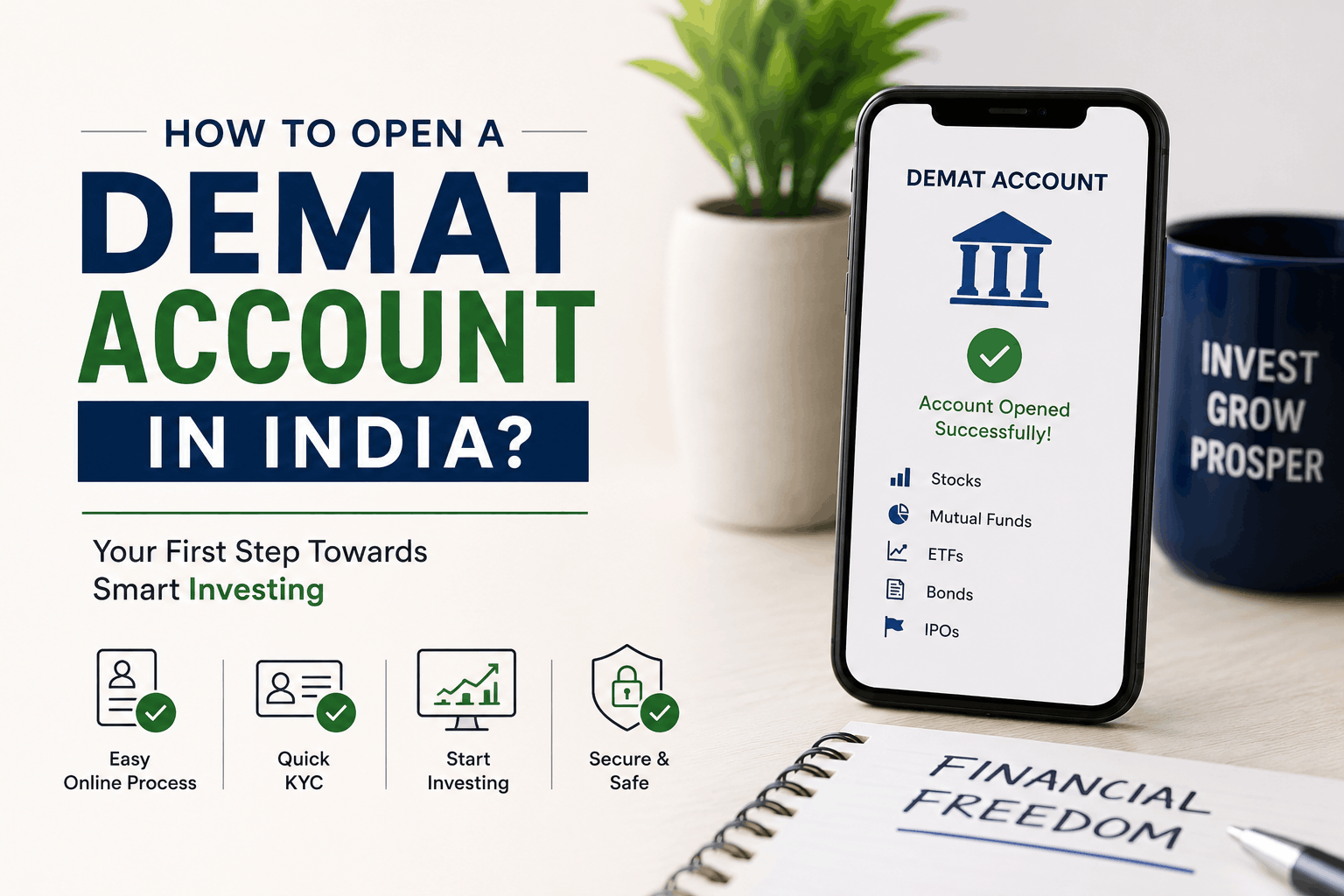
How to Open a Demat Account in India? A Complete Beginner’s Guide
If you’re planning to invest in the Indian stock market, the first step is opening a Demat Account. Whether you want to invest in stocks, mutual funds, ETFs, bonds, or IPOs, a Demat Account is essential for holding your investments securely in electronic form. Understanding how to open a Demat Account in India is one of the most important lessons for every beginner investor.
In this guide, we’ll explain the complete process of opening a Demat Account, the documents required, and the factors you should consider before choosing a broker.
What is a Demat Account?
A Demat (Dematerialized) Account is an account that stores your securities such as shares, bonds, ETFs, government securities, and mutual funds in digital format. It eliminates the need for physical share certificates and makes buying, selling, and managing investments safe, convenient, and paperless.
Every investor participating in the Indian stock market is required to have a Demat Account.
Difference Between a Demat Account and a Trading Account
Many beginners confuse these two accounts.
A Demat Account stores your securities electronically after purchase.
A Trading Account is used to buy and sell securities on stock exchanges like the National Stock Exchange (NSE) and the Bombay Stock Exchange (BSE).
Most brokers today offer both accounts together, making the investment process seamless.
Documents Required to Open a Demat Account
Opening a Demat Account is simple and can usually be completed online within a few minutes. You’ll typically need the following documents:
- PAN Card
- Aadhaar Card
- Mobile Number linked with Aadhaar
- Email Address
- Bank Account Details
- Passport-size Photograph
- Digital Signature (where applicable)
Ensure that your mobile number is linked to your Aadhaar for smooth e-KYC verification.
Step-by-Step Process to Open a Demat Account
Step 1: Choose a SEBI-Registered Broker
Select a reliable brokerage firm that offers transparent pricing, excellent customer support, user-friendly trading platforms, and strong security features.
Step 2: Complete Online Registration
Visit the broker’s website or mobile application and fill in your personal details such as name, mobile number, email address, and PAN details.
Step 3: Complete KYC Verification
Upload the required documents and complete Aadhaar-based OTP verification or video KYC, depending on the broker’s process.
Step 4: Link Your Bank Account
Provide your bank account details to enable smooth fund transfers for buying and selling securities.
Step 5: Verification and Account Activation
After successful verification, your Demat and Trading Accounts are activated. You will receive your Client ID, login credentials, and other account details.
Things to Consider Before Choosing a Broker
Not all brokers offer the same services. Before opening your account, compare the following:
- Brokerage charges
- Annual Maintenance Charges (AMC)
- Trading platform quality
- Research and advisory services
- Customer support
- Mobile application features
- Security and compliance standards
Choosing the right broker can significantly improve your investing experience.
Common Mistakes Beginners Should Avoid
Many first-time investors make avoidable mistakes, such as:
- Choosing a broker solely because of low brokerage fees.
- Ignoring hidden charges.
- Sharing login credentials with others.
- Investing without understanding the company’s fundamentals.
- Following stock tips from unverified social media sources.
A Demat Account is merely a gateway to investing—long-term success depends on knowledge, research, and disciplined investing.
Conclusion
Opening a Demat Account in India is simple, fast, and completely digital. However, opening an account is only the beginning of your investment journey. Building long-term wealth requires understanding company fundamentals, managing risk wisely, and making informed investment decisions.
Disclaimer: Investments in the securities market are subject to market risks. Please read all related documents carefully before investing. The articles published on this website are for educational purposes only and do not constitute investment advice. Content is reviewed by a SEBI Registered Research Analyst (SEBI Reg. No. INH200009193) and BSE Enlistment No. 5525.